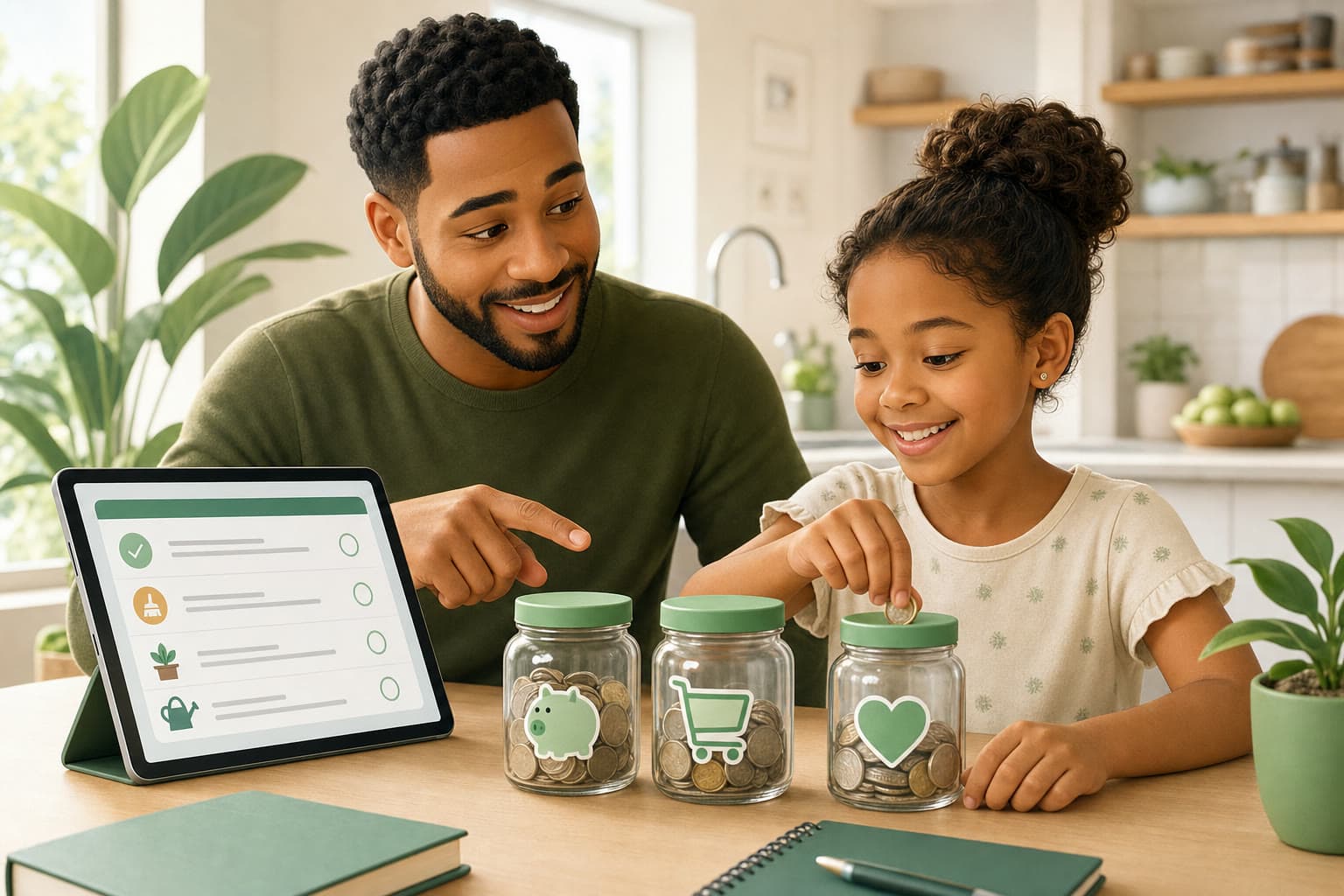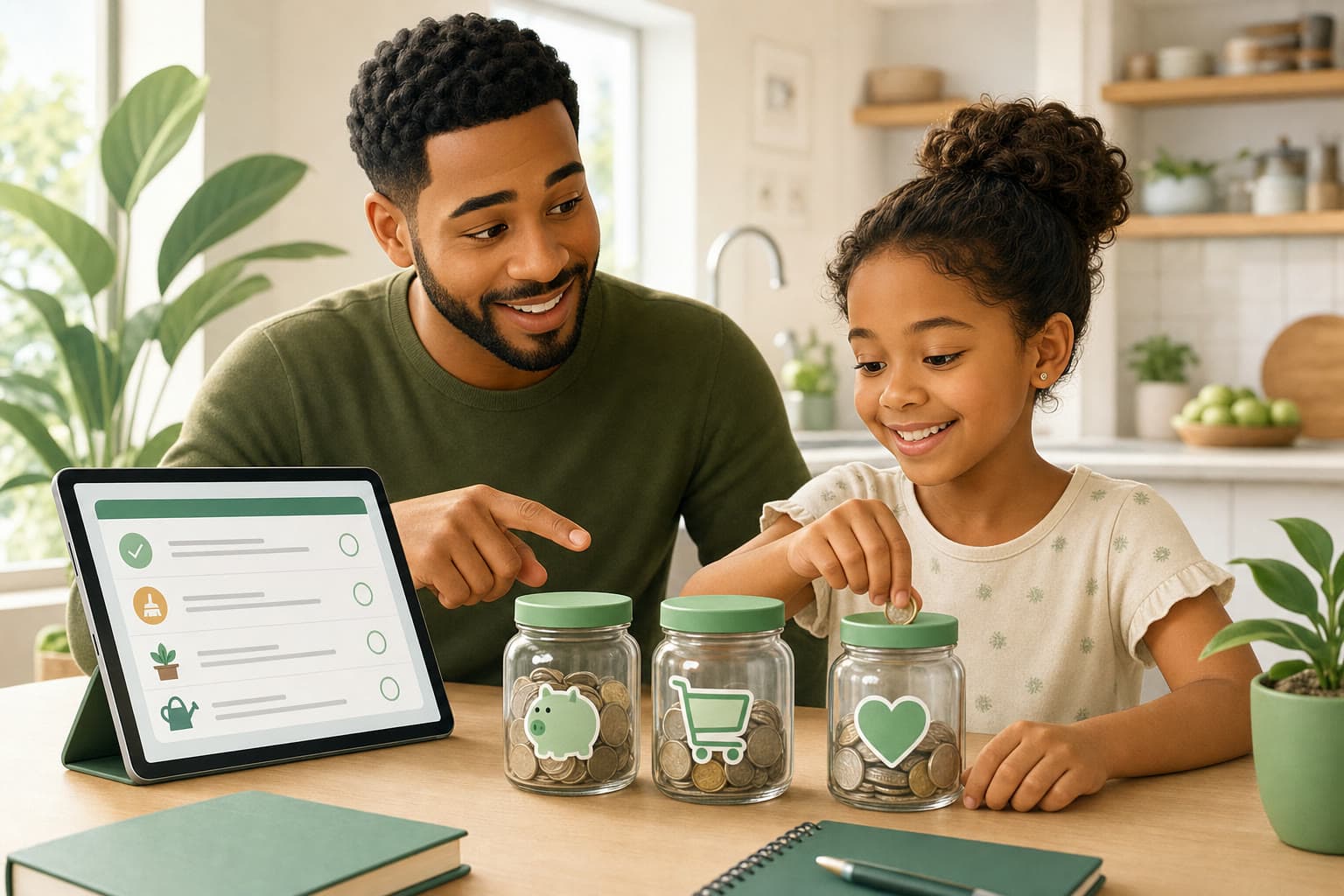
Start with the why
Kids learn money best when they can connect effort to reward. Paying for chores turns an abstract idea — money — into something they can earn, see, and decide what to do with.
Before you set amounts, talk about why it matters: money is a tool, and learning to use it well is a skill they’ll practice for life.
Separate expected chores from paid chores
Some jobs are just part of living in a family — making the bed, clearing their plate. Keep those unpaid. Add a short list of extra jobs that earn money, so kids learn that extra effort creates extra value.
- Expected: tidy room, help with dinner, pack school bag
- Paid: wash the car, rake leaves, deep-clean the fridge
Split every payday
A simple rule like save some, spend some, share some gives kids a framework they can repeat every week. Over time they’ll see their savings grow toward a real goal.
- Save — for a goal they choose
- Spend — on small things they want now
- Share — for gifts or causes they care about
Stay in the loop
Approving chores and purchases together creates natural moments to talk about choices. In Earnly, kids check off chores and you approve them before money moves — so every payday is also a conversation.